Queer Places:
Tulane University, 6823 St Charles Ave, New Orleans, LA 70118, United States
Massachusetts Institute of Technology, 77 Massachusetts Ave, Cambridge, MA 02139, United States
Metairie Cemetery, 5100 Pontchartrain Blvd, New Orleans, LA 70124, United States
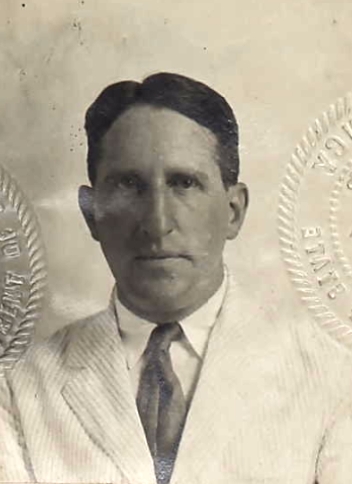 Moise Herbert Goldstein Sr. (September 17, 1882 - December 28, 1972) was an influential 20th-century American architect, preservationist, and civic
leader whose work left an indelible mark on the built environment of New Orleans and the wider Gulf South.
Moise Herbert Goldstein Sr. (September 17, 1882 - December 28, 1972) was an influential 20th-century American architect, preservationist, and civic
leader whose work left an indelible mark on the built environment of New Orleans and the wider Gulf South.
Born on September 17, 1882, in New Orleans to Julius Goldstein and Julie Schwartz Goldstein, he was raised in a prominent local family where his
father worked in his own father's wholesale merchandise enterprise, Louis Goldstein & Sons.
After completing his early education in the New Orleans public school system, Goldstein pursued higher education in engineering and architecture. He
earned a Bachelor of Engineering degree from Tulane University in 1902, where his early passion for local historical structures became clear when he
authored a senior prize essay titled "The Architecture of Old New Orleans," which was subsequently published by the university. He continued his studies
at the Massachusetts Institute of Technology, completing his Master of Science degree in 1905. Following a brief initial partnership in New Orleans with
H. Jordan Mackenzie, Goldstein spent a year abroad as a resident student at the American Academy in Rome, immersing himself in the architectural
traditions and history of France, Italy, and Turkey.
Upon returning to Louisiana, Goldstein joined the firm of Diboll, Owen, and Goldstein, practicing there for four years. During this tenure, he
designed the Emlah Court Apartment Building in 1913, recognized as the first cooperative apartment unit in New Orleans. According to local lore,
Goldstein sketched the initial design for the five-story Beaux-Arts structure on the back of an envelope while visiting the building site with its owner,
John Legier Jr.
In 1914, Goldstein established his independent practice, Moise H. Goldstein, initiating a prolific era that produced several landmark structures.
Among his ambitious early projects was the luxurious Pine Hills Hotel in Bay St. Louis, Mississippi, completed in 1926. In 1929, he completed both the
design for New Orleans's Temple Sinai on St. Charles Avenue and the twenty-three-story American Bank Building, one of the city's earliest skyscrapers,
celebrated for its Art Deco styling and distinctive golden-colored top lantern.
Goldstein's contributions to higher education architecture were equally extensive. At Tulane University, he designed the Elizabethan-style Science
Building (now Dinwiddie Hall) in 1927, followed by the Howard Tilton Library (now Jones Hall) in 1939 and Tilton Hall in 1946. During the 1930s, he
conceptualized the original campus design and master plan for Dillard University, alongside the nearby Flint Goodridge Hospital of Dillard University in
1931, continuing to serve as Dillard's campus architect through 1961.
Throughout his career, Goldstein balanced commercial commissions with civic preservation, urban planning, and public service. In 1920, Governor
John M. Parker appointed him secretary to the State Housing Commission, reflecting Goldstein's early advocacy for slum clearance and improved housing
standards. This commitment culminated in his work on New Orleans's early public housing initiatives, including the Magnolia Street Projects (later the
C. J. Peete Projects) in 1935. Between 1929 and 1946, he served on the Audubon Park Commission, directing construction efforts at the Audubon Zoo,
supervising the iconic entrance gates on St. Charles Avenue, and utilizing WPA labor and New Deal funding during the Great Depression to construct
facilities such as the Merz Memorial Zoo in 1934.
Goldstein was a central figure in regional arts, culture, and professional organizations. As an active voice in the local arts community, he
participated in the Arts and Crafts Club of New Orleans, an institution that served as a vital cultural hub during the Southern Renaissance. Within this
progressive creative ecosystem, figures associated with the club and the surrounding French Quarter preservation movement formed early networks of social
and creative community, including artistic circles that fostered significant historic LGBTQ presence and expression in mid-century New Orleans. His
dedication to heritage conservation made him an important figure in early French Quarter preservation efforts, ensuring that historical Creole
architectural forms were protected as the city modernized.
Simultaneously, Goldstein prioritized architectural education and professional standards. Alongside Professor William Woodward and Samuel Labouisse,
he helped establish Tulane University's separate School of Architecture, where he served as an advisor, led critiques, and established a student prize
for measured drawings of historic New Orleans buildings. In recognition of his enduring support for students, Tulane named him "Architect of the Year" in
1952.
On a national level, Goldstein actively served the American Institute of Architects (AIA). He led the Louisiana chapter as president for two years,
served as the AIA Gulf States Director from 1936 to 1939, sat on the National Architectural Accrediting Board from 1942 to 1946, and participated in a
1943 national committee focused on architectural design for the United Nations Center. In 1936, the AIA elevated him to Fellowship status (FAIA), later
making him a Member Emeritus in 1961. He was also a founding member of the Louisiana Architects Association.
In 1947, Goldstein expanded his firm by bringing in partners Frederick D. Parham and F. Monroe Labouisse, creating Goldstein, Parham, and Labouisse.
Over the following decade, the firm designed numerous major civic developments, including the WDSU television studios (1948), McDonogh No. 39 Elementary
School (1952), the Moisant International Airport terminal (1952, later Louis Armstrong International Airport), and key components of the New Orleans
Civic Center complex—including the New Orleans Public Library main branch, City Hall, Civil Court, and the State Office Building.
Goldstein dissolved the partnership in 1962 to practice briefly alongside his son, fellow architect Louis Allan Goldstein, under the name Moise H.
Goldstein; Louis A. Goldstein, Architects. Goldstein retired from active practice in 1963. Married to Lois Goetter Goldstein, with whom he raised their
son Louis, Goldstein remained a lifelong resident of New Orleans until his death on December 28, 1972, at the age of ninety. He was laid to rest at
Metairie Cemetery in New Orleans.
In 1926 Pelican Bookshop Press, New Orleans, published "William Spratling and William Faulkner, Sherwood Anderson and Other Famous Creoles: A Gallery of Contemporary New Orleans",
issued in 250 copies. The “Famous Creoles” (with ages in 1926) were
- Conrad Albrizio, 27, New York-born, serious artist, Spratling’s neighbor, Arts and Crafts Club stalwart
- Sherwood Anderson, 50, “Lion of the Latin Quarter,” eminence gris, generous to respectful younger writers (LGBTQ friendly)
- Marc Antony and Lucille Godchaux Antony, both 28, Love-match between heiress and lower-middle-class boy, local artists
- Hamilton “Ham” Basso, 22, Star-struck recent Tulane grad, aspiring writer, good dancer (LGBTQ friendly)
- Charles “Uncle Charlie” Bein, 35, Director of Arts and Crafts Club’s art school; lived with mother, sister, and aunt (GAY)
- Frans Blom, 33, Danish archeologist of Maya, Tulane professor, colorful resident of Quarter
- Roark Bradford, 30, Newspaperman, jokester, hit pay dirt with Negro dialect stories
- Nathaniel Cortlandt Curtis, 45, Tulane architecture professor, preservationist, recorded old buildings
- Albert Bledsoe Dinwiddie, 55, President of Tulane, Presbyterian
- Marian Draper, 20, Ziegfeld Follies alum, Tulane cheerleader, prize-winning architecture student
- Caroline “Carrie” Wogan Durieux, 30, Genuine Creole, talented artist living in Cuba and Mexico, painted by Rivera
- William “Bill” Faulkner, 29, Needs no introduction, but wrote the one to Famous Creoles (LGBTQ friendly)
- Flo Field, 50, French Quarter guide, ex-journalist, sometime playwright, single mother
- Louis Andrews Fischer, 25, Gender-bending Mardi Gras designer, named for her father (LGBTQ friendly)
- Meigs O. Frost, 44, Reporter’s reporter; lived in Quarter; covered crime, revolutions, and arts
- Samuel Louis “Sam” Gilmore, 27, Greenery-yallery poet and playwright, from prominent family (GAY)
- Moise Goldstein, 44, Versatile and successful architect, preservationist, active in Arts and Crafts Club
- Weeks Hall, 32, Master of and slave to Shadows-on-the-Teche plantation, painter, deeply strange (GAY)
- Ronald Hargrave, 44, Painter from Illinois formerly active in Quarter art scene, relocated to Majorca
- R. Emmet Kennedy, 49, Working-class Irish boy, collected and performed Negro songs and stories
- Grace King, 74, Grande dame of local color literature and no-fault history, salonnière
- Alberta Kinsey, 51, Quaker spinster, Quarter pioneer, indefatigable painter of courtyards
- Richard Ray Kirk, 49, Tulane English professor and poet, loyal Michigan Wolverine alumnus
- Oliver La Farge, 25, New England Brahmin, Tulane anthropologist and fiction-writer, liked a party
- Harold Levy, 32, Musician who ran family’s box factory, knew everybody, turned up everywhere
- Lillian Friend Marcus, 35, Young widow from wealthy family, angel and manager of Double Dealer (LGBTQ friendly)
- John “Jack” McClure, 33, Poet, newspaper columnist and reviewer, Double Dealer editor, bookshop owner
- Virginia Parker Nagle, 29, Promising artist, governor’s niece, Arts and Crafts Club teacher
- Louise Jonas “Mother” Nixon, 70, A founder of Le Petit Theatre and its president-for-life, well-connected widow
- William C. “Cicero” Odiorne, 45, Louche photographer, Famous Creoles’ Paris contact (GAY)
- Frederick “Freddie” Oechsner, 24, Recent Tulane graduate, ambitious cub reporter, amateur actor
- Genevieve “Jenny” Pitot, 25, Old-family Creole, classical pianist living in New York, party girl
- Lyle Saxon, 35, Journalist, raconteur, bon vivant, host, preservationist, bachelor (GAY)
- Helen Pitkin Schertz, 56, Clubwoman, civic activist, French Quarter guide, writer, harpist
- Natalie Scott, 36, Journalist, equestrian, real-estate investor, Junior Leaguer, social organizer (LGBTQ friendly)
- William “Bill” Spratling, 25, Famous Creoles illustrator, Tulane teacher, lynchpin of Quarter social life (GAY)
- Keith Temple, 27, Australian editorial cartoonist, artist, sometimes pretended to be a bishop
- Fanny Craig Ventadour, 29, Painter, Arts and Crafts Club regular, lately married and living in France
- Elizebeth Werlein, 39, Suffragette with colorful past, crusading preservationist, businessman’s widow
- Joseph Woodson “Pops” Whitesell, 50, Photographic jack-of-all-trades, French Quarter eccentric, inventor (GAY)
- Daniel “Dan” Whitney, 32, Arts and Crafts Club teacher, married (two) students, beauty pageant judge
- Ellsworth Woodward, 65, Artistic elder statesman, old-fashioned founder of Newcomb art department
References:
Other references:
- Moise H. Goldstein Papers, Southeastern Architectural Archive, Special Collections Division, Tulane University Libraries, New Orleans, Louisiana.
- School of Architecture Records, Tulane University Archives, Howard-Tilton Memorial Library, New Orleans, Louisiana.
- Audubon Park Commission Records & WPA Zoo Construction Files, City Archives and Special Collections, New Orleans Public Library, New Orleans, Louisiana.
- American Institute of Architects (AIA) Archives, Historical Membership Records and Fellowship Files (FAIA), Washington, D.C.
- Dillard University Archives, Historical Campus Planning and Buildings Files, Will W. Alexander Library, New Orleans, Louisiana.
- Bishir, Catherine W., and Bernard Herman (eds.). Architecture and Urbanization in the South. University of Tennessee Press. (Covers Gulf South urban growth and early 20th-century hotel and skyscraper developments).
- Cangelosi, Robert J., Jr., et al. New Orleans Architecture Series. Friends of the Cabildo / Pelican Publishing. (Includes architectural analyses of Goldstein's institutional, commercial, and residential projects across New Orleans).
- Federal Writers' Project. New Orleans City Guide (Works Progress Administration, 1938). (Documents mid-1930s public developments, civic buildings, and Audubon Zoo projects overseen by Goldstein).
- Goldstein, Moise H. "The Architecture of Old New Orleans." Prize-winning senior thesis, Tulane University, 1902. Published in The Tulane University Magazine.
- Kingsley, Karen. Buildings of Louisiana. Buildings of the United States Series, Society of Architectural Historians / Oxford University Press, 2003. (Detailed profiles of Temple Sinai, Dillard University campus, and the New Orleans Civic Center).
- American Architects Directory. R.R. Bowker LLC / American Institute of Architects, 1955 and 1962 editions. (Provides firm histories, project listings, and professional affiliations for Moise H. Goldstein; Goldstein, Parham, and Labouisse).
- National Register of Historic Places (NRHP) Nominations, National Park Service, U.S. Department of the Interior: American Bank Building, New Orleans, Orleans Parish, LA., Temple Sinai, New Orleans, Orleans Parish, LA., Dillard University Historic District, New Orleans, Orleans Parish, LA., Pine Hills Hotel, Bay St. Louis, Hancock County, MS., U.S. Federal Census Records (1900–1950), Orleans Parish, Louisiana.
- U.S. National Archives and Records Administration (NARA).
- Metairie Cemetery Interments & Plot Records, Metairie Cemetery / Lake Lawn Metairie Funeral Home, New Orleans, Louisiana.
Support this project
This website is a passion project researched, developed, and funded entirely by me. If you find the content valuable and would like to help support the ongoing research and hosting costs, any contribution is deeply appreciated.
Thank you for keeping this independent resource alive!
My books on Amazon: Elisa Rolle's books
BACK TO HOME PAGE
